Living Simply
You arrive in a town of 300 souls. Your bedroom has everything—4K display, strong WiFi, a mat if you brought your practice. No teacher. No guide. No schedule. Just you, the stillness, and whatever you came here to discover.
This is a place for adults who know what they need—or who are ready to find out. Some come through SILK Franchise, learning the Y.A.C.H.T. disciplines at their own pace. Others arrive for SILK Retreat, diving deep into their chosen practice. All arrive knowing one thing: there's no curriculum here. No instructor waiting to tell you how to spend your days. This is Montessori for grown humans who've outgrown being taught.
For SILK Franchise Learners & SILK Retreat Students
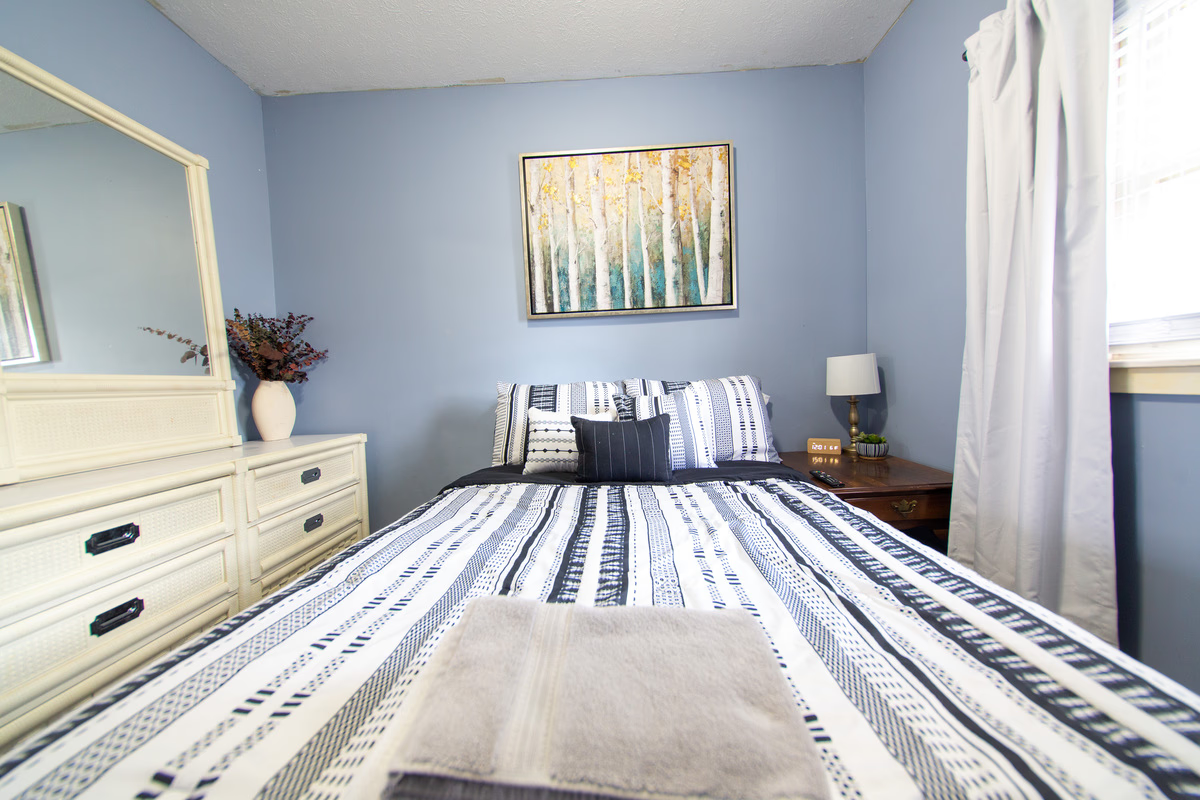
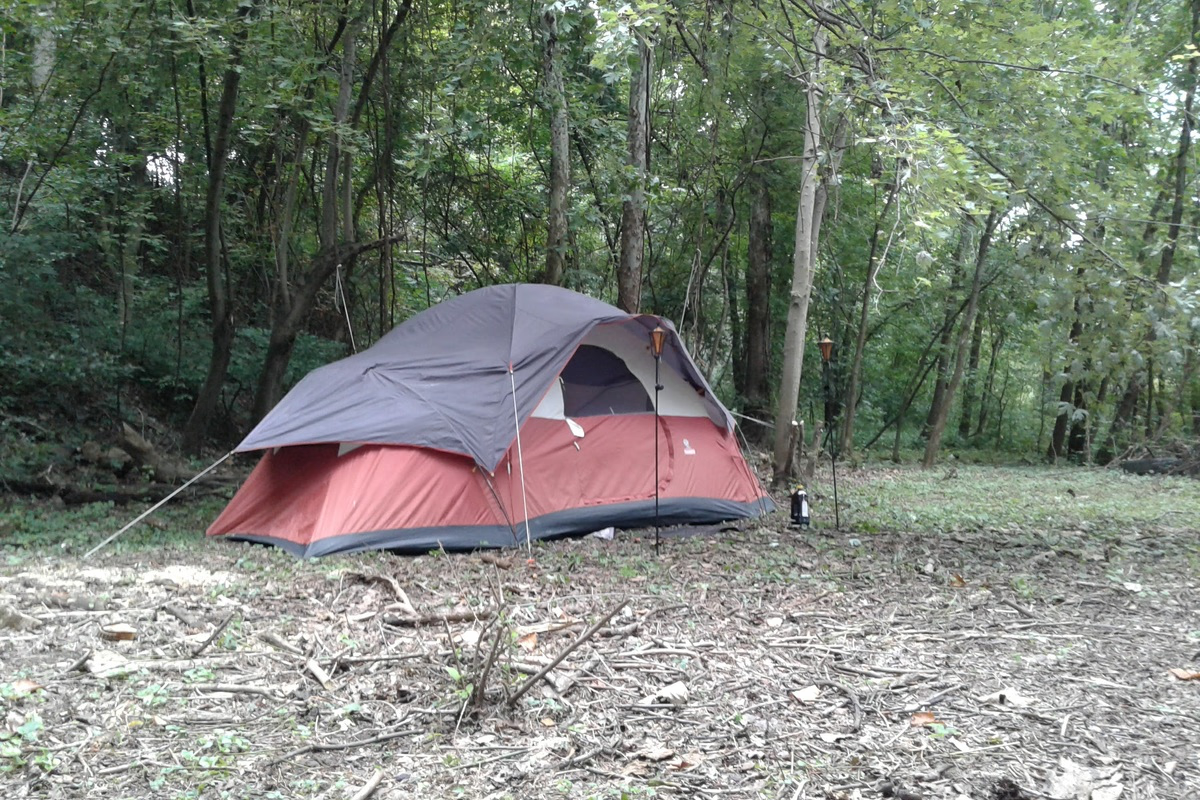
Whether you're here to explore Yoga, Art, Cuisine, Habitat, or Tech—or to sit in deep meditation practice—you'll find what you need. Not because we provide it, but because you bring it. We simply offer the container: quiet rooms in quiet towns, far from the noise.
The container matters
Quiet living is easier when the room is already doing less.
A comfortable bed, a working surface, and a little daylight can be enough structure for a self-directed day.
Your Practice, Your Pace
You might find yourself waking before dawn to sit in vipassana meditation in a corner of your room, the only sound the hum of the Qi charger on your nightstand. Or perhaps you'll spend the afternoon working through a new painting technique, your laptop streaming a tutorial while you work on the small desk by the window—BYOL means you brought exactly what you needed.
The yoga room down the hall holds three people, maybe two comfortably. It's not designed for classes. It's designed for you—alone with your breath, or with one other soul who happens to be exploring the same limb of practice you are. Some mornings you take your mat to the porch. Some evenings you practice in your room. No one's watching. No one's grading. You're learning the way adults learn: by doing, by failing, by discovering.
The Eight Limbs Are Yours to Walk
If you practice yoga, you know the eight limbs aren't taught—they're lived. Yama, niyama, asana, pranayama, pratyahara, dharana, dhyana, samadhi. These aren't classes on a schedule. They're invitations you accept in your own time, in your own way.
You might spend a week focused entirely on pranayama, sitting in the reading nook for hours with your breath. Or you might dive into dharana, concentration practice, using your art or your cooking as the object of focus. There's no teacher here to tell you which limb to work on. You know. Or you're learning to know.
What This Looks Like
Morning meditation in your room. Afternoon asana in the small studio or on your mat by the window. Evening walks through town as moving meditation. The practice is self-initiated, self-sustained. Like Montessori, the environment is prepared—but the learning is entirely yours.
Y.A.C.H.T. Without a Captain
Yoga. Art. Cuisine. Habitat. Tech. The five disciplines of SILK Franchise. But here's what's different: there's no one standing over you, telling you how to learn them. You're the student and the teacher. The environment simply supports what you came to do.
Your bedroom becomes your tech studio—4K screen for design work, 20A power for whatever equipment you brought, WiFi strong enough for uploads and downloads. The small kitchen becomes your cuisine laboratory. The porch becomes your art studio when the light is right. The habitat practice? That's in how you keep your space, how you move through these small towns, how you exist in stillness.
Self-Directed, Not Solitary
You might find another SILK learner working on their art practice in the common area. You might share a technique. You might cook together one evening. Or you might not. The community emerges naturally from shared space and shared intention—never from obligation.
Everything You Need, Nothing You Don't
We chose small towns—some under 300 people, some around 4,000, our largest at 50,000—because learning happens in quiet. Real quiet. Not the manufactured silence of a corporate retreat center, but the actual stillness of a place where cars don't rush by, where you can hear yourself think, where the night sky shows you stars you forgot existed.
Your Bedroom Is Your Sanctuary
Large 4K TV for the documentary you're studying or the film you need to decompress. Strong WiFi because your practice might be digital—tech work, online art courses, streaming yoga philosophy lectures. Qi chargers at every bedside because your phone, your tablet, your tools need to stay powered. 20A electrical capacity for whatever you brought. BYOL—bring your own laptop, your own tools, your own practice.
Some rooms have desks. Some have yoga mats already laid out. All have what you need to work, to practice, to rest, to think. You could spend three days in this room without leaving and have everything required for deep work. That's intentional.
Minimalism That Supports
Nothing extraneous. Nothing performative. Just a clean, complete space that gets out of your way so you can focus on why you came: to learn, to practice, to find yourself in the discipline.
Small Spaces for Intimate Practice
The yoga room holds two people, maybe three if you're really close. There's no grand studio. No mirrored walls. No space for twenty students. Because this isn't about gathering a crowd—it's about going deep. You practice alone most days. Some mornings another practitioner is there, working through their own sequence. You share the space in silence, both grateful for the companionship and the permission not to speak.
Reading nooks in corners. Meditation spots by windows. Garden benches under old trees. These aren't sprawling facilities. They're intimate containers for the kind of practice that requires you to show up, not as part of a group, but as yourself.
By Design, Not Limitation
We could have built bigger spaces. We chose not to. The intimacy is the point. When the room only holds three people, you can't hide in the back. You can't be anonymous. You have to practice.
Far from Urban Sprawl, Close to Stillness
Our smallest town has 300 residents. You'll know the face of everyone you pass on Main Street within a week. The grocery store closes at 6pm. The library is open three days a week. This isn't a limitation—it's liberation from the constant demands of city life.
The mid-sized towns—around 4,000 people—give you a bit more infrastructure. A coffee shop where you might work on your laptop. A small bookstore. A farmers market on Saturdays. Still quiet. Still slow. Still a place where you can disappear into your practice without the world demanding your attention.
Even our largest location, at 50,000 people, skews toward seniors and families. No nightlife. No hustle culture. No pressure to be "out and about." These places were chosen because they respect the rhythm of someone who came here to learn, not to be entertained.
Voluntary Contribution, Natural Flow
Here's what happens when adults share space without obligation: community emerges organically. Someone's making dinner and asks if you want to join. You say yes or no—both are fine. Someone's leading an informal session on their practice area—tonight it's pranayama techniques, next week it might be watercolor fundamentals—and you show up if it serves your learning. Or you don't.
Cleaning happens because we're adults living in shared space and we keep our areas tidy. Cooking happens because people need to eat and sometimes it's nice to cook for more than one. Sessions happen because someone has learned something and wants to share it—not because there's a schedule demanding content, but because the impulse to teach arises naturally from the impulse to learn.
No Mandatory Anything
You won't be assigned chores. You won't be required to attend gatherings. You won't have your day structured by someone else's idea of what your practice should look like. You're an adult. You came here knowing what you need. We trust that.
What This Means
If you want to spend a week in silence, working through a meditation retreat of your own design, you can. If you want to join communal meals every evening, you can. The rhythm is yours to set.
Contribution from Inspiration
You might find yourself cooking dinner for the house one evening—not because it's your turn, but because you're working on your cuisine practice and you want to try a new recipe. Someone might join you in the kitchen. You might teach them the technique. Or you might not. It flows naturally.
The Gift of Voluntary
When contribution is voluntary, it becomes joyful. The person sweeping the porch isn't resentful—they're practicing mindfulness through habitat care. The one leading tonight's yoga session isn't performing—they're sharing what they've discovered in their own practice.
Sessions Emerge, They're Not Scheduled
Someone mentions they've been working on a particular aspect of their art practice. Someone else is curious. A small session forms—three people in the common room, sharing techniques, asking questions. It lasts an hour. Or three. It ends when it's complete. There's no bell. No timer. No next class waiting for the room.
Learning as Living
This is what Montessori understood: real learning doesn't follow a schedule. It follows curiosity, need, readiness. Here, you learn when you're ready. You share when you're moved to. The container supports it, but never forces it.
Adults Only, for a Reason
This model works because everyone here is an adult. We don't need structure imposed from outside because we carry structure within. We keep shared spaces clean. We respect quiet hours. We show up for ourselves and, when it serves, for each other. But it starts with self-responsibility.
Why This Matters
Children need guidance. Adults need space. This environment is designed for people who've graduated from needing to be told what to do and are ready to discover what they want to do.
Know Before You Come
There are no surprises here. Before you arrive, you'll know: the town size, the bedroom setup, the available practice spaces, the rhythm of communal life, what's expected (very little) and what's available (exactly what you need). This isn't about creating mystery—it's about creating clarity so you can decide if this is right for you.
What You'll Find Here
- Small towns: 300 to 50,000 people, far from urban sprawl
- Complete bedrooms: 4K TV, strong WiFi, Qi chargers, 20A power, BYOL culture
- Small practice spaces: yoga rooms for 2-3, reading nooks, meditation corners
- Self-directed learning: no teachers, no curriculum, no schedule
- Y.A.C.H.T. focus for SILK Franchise learners: Yoga, Art, Cuisine, Habitat, Tech
- Vipassana and eight limbs available for those with established practices
- Voluntary contributions: cooking, cleaning, sessions emerge naturally
- Adults only: everyone here is self-responsible
- Independence valued: we stay to ourselves unless connection serves
- Peace, minimalism, emptiness, quiet as foundational values
What We're Not
- A yoga studio with scheduled classes and teachers
- A retreat center with facilitated programming
- A social hub demanding constant interaction
- A place near cities or with urban amenities
- A space with sprawling facilities or grand studios
- An environment for those needing external structure
- A good fit for people uncomfortable with small towns
- A place for those who equate "busy" with "meaningful"
- Suitable for children or family living
- A guided experience with staff leading your days
You Might Find Yourself...
...waking at 5am in a town of 800 people, the street outside your window completely silent. You roll out your mat—the one you brought, because BYOL means you came prepared—and move through your asana practice in the blue light before dawn. The Qi charger glows softly on your nightstand. Your phone is at 100%. You're at zero—empty, ready, present.
Later, you sit at the small desk by the window, your laptop open, working through a tech project. The WiFi is strong. The room is quiet. Hours pass. You're learning not because someone assigned this, but because you chose it. That's the difference.
Afternoon. You walk to town—all six blocks of it. The hardware store owner waves. You wave back. You buy coffee at the only cafe and sit on a bench in the town square, reading. A book about art theory. Or maybe cooking techniques. Or maybe nothing—maybe you're just sitting, practicing being, letting the emptiness of the small town teach you what the city never could.
Evening. Someone's cooking dinner in the shared kitchen. They ask if you want to join. You do. Or you don't. Tonight you do. You help chop vegetables, talking about your respective practices—they're working on habitat design, you're focused on cuisine this month. The conversation flows. The meal is simple. You eat together. You clean together. It's community, but it's voluntary. It feels light, not heavy.
Later, back in your room, you sit for vipassana. Twenty minutes. Then forty. Then an hour. No one's timing you. No bell rings. You sit until you're done. The small town is dark outside. The stars are bright. You're exactly where you need to be, doing exactly what you came to do. Learning. Practicing. Finding yourself in the discipline and the stillness.
This is Montessori for adults who've outgrown being students. This is a place for people ready to be their own teacher. This is living simply—not as deprivation, but as precision. Everything you need. Nothing you don't. Small towns. Quiet rooms. Self-directed practice. Voluntary community.
You know before you arrive. You decide if it serves you. You come if it does.
This Is What I've Been Looking ForReady to Begin?
For SILK Franchise learners exploring Y.A.C.H.T. disciplines. For SILK Retreat students diving deep into practice. For anyone who knows they need quiet, space, and the freedom to learn without being taught.